Wooden Building Blocks Guide: Why Montessori Parents Are Choosing Wood Over Plastic (Featuring Everwood Friends)
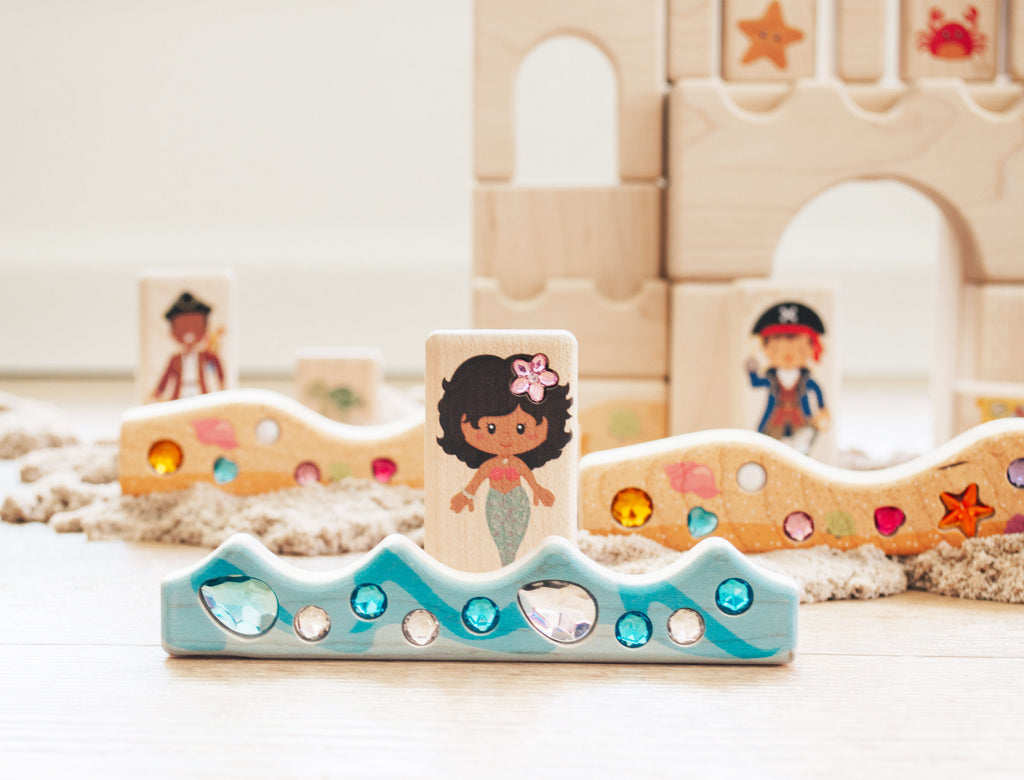
If you've ever watched a toddler abandon a flashing, noise-making toy in favor of a plain wooden block, you already know something Montessori educators have said for decades: simple materials build deeper focus. Wooden toys don't do the thinking for a child — they invite it. We're excited to introduce our newest wooden toy brand, Everwood Friends, and put together this guide to help you choose the right set for your child's age and stage.
Why Choose Wooden Toys Over Plastic
Wood offers something plastic can't replicate: natural weight, texture, and sound feedback. When blocks stack, tip, and knock together, children get real sensory information that helps them learn cause and effect — plastic blocks are lighter and quieter, giving less of that feedback loop. Wooden toys are also virtually indestructible, safe from BPA and phthalates, and tend to be passed down between siblings rather than thrown away after a year.
What Makes Everwood Friends Different
Everwood Friends blocks are made from solid maple in Minnesota, USA — not imported, not painted with anything questionable, just sanded smooth and left to show off the natural wood grain. Each piece is sized and weighted for little hands, with no small detachable parts to worry about. It's the kind of toy that looks as good sitting on a nursery shelf as it does scattered across the living room floor mid-play.
How to Choose the Right Set by Age
12–18 months: Look for larger, chunkier pieces that are easy to grasp and safe even if mouthed. Stacking and simple sorting is the main skill at this stage.
18 months–3 years: Toddlers at this age are ready for open-ended building — towers, simple structures, and imaginative combinations with other toys. This is the sweet spot for most standard building block sets.
3+ years: Older toddlers and preschoolers can handle more complex builds and benefit from sets with a wider variety of shapes, encouraging early geometry and balance concepts.
Caring for Wooden Blocks
Unlike plastic, wooden blocks shouldn't be soaked or run through the dishwasher. Wipe with a barely damp cloth and dry immediately — this keeps the wood from warping or splitting over time. Stored away from direct sunlight and humidity, a solid maple set like Everwood Friends can realistically last through multiple children.
Shop the full Everwood Friends collection at littlewild kids →
FAQ
With love, Doris & Zoey